28 July 2025
 Share
Share
1

Binance is the world’s leading cryptocurrency exchange by volume, offering a robust platform for trading, staking, and storing digital assets. Launched in 2017 by Changpeng Zhao, Binance has grown into a comprehensive crypto ecosystem. Whether you’re a beginner or an experienced trader, Binance provides the tools needed to navigate the world of digital currencies.
This complete 2025 guide covers everything from creating an account to understanding trading interfaces and fees. New users will find detailed instructions on how to register, verify identity through KYC (Know Your Customer), and secure their accounts using 2FA (Two-Factor Authentication). You’ll also learn how to deposit funds, convert currencies, and access Binance’s two major markets: spot and futures. For those seeking passive income, we’ll walk through Binance’s staking and Launchpool features.
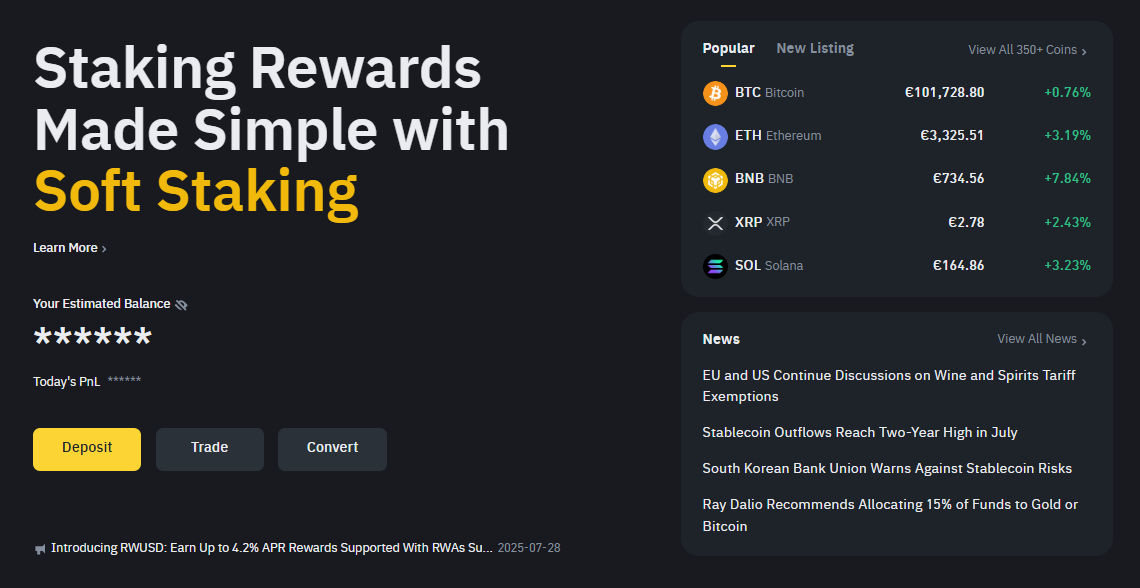
Binance’s user interface is intuitive and designed to scale with your experience level. From simple one-click conversions to advanced leveraged trading, Binance accommodates a wide range of strategies. And importantly, fees on Binance remain among the lowest in the industry.
If you’re ready to explore one of the most powerful platforms in crypto, this guide will provide a clear, practical roadmap. Read on to master Binance in 2025.
Get 100 $ bonus on Binance now
Binance is a centralized cryptocurrency exchange that allows users to trade hundreds of digital assets including Bitcoin, Ethereum, and altcoins. In addition to trading, Binance offers financial services like savings, staking, and DeFi access via its proprietary tools.
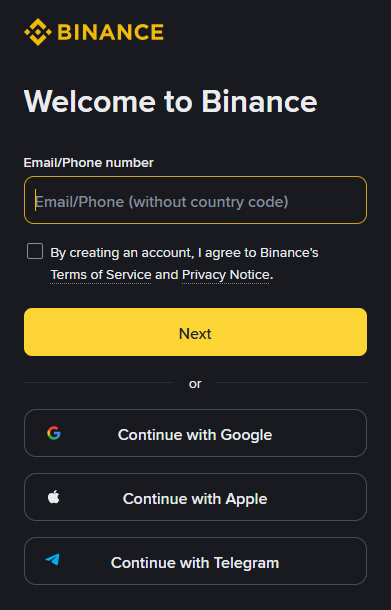
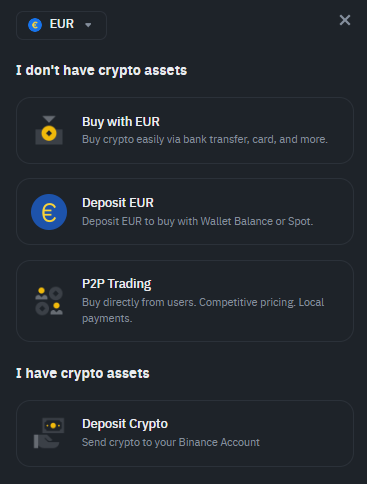
The spot exchange is Binance’s most-used feature. Spot trading lets you buy or sell crypto assets at current market prices. You can access it through the “Trade” menu and choose between “Convert,” “Classic,” and “Advanced” interfaces. Here’s how each one works:

Get 100 $ bonus on Binance now
Once you select a trading pair (e.g., BTC/USDT), you can place orders such as market, limit, or stop-limit. Market orders execute instantly, while limit orders allow you to set your own buying or selling price.
Futures trading is available on Binance Futures, which operates separately from the spot market. It allows users to speculate on asset prices using leverage up to 75x. Leverage can amplify gains but also increases risk significantly. Users must first transfer USDT or another collateral asset from their spot wallet to the futures wallet.
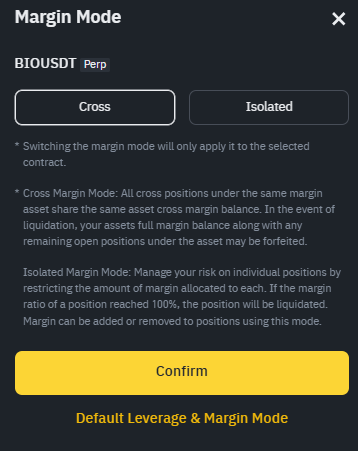
Futures trading involves margin types (cross or isolated), and it’s best suited for experienced traders. You can open long (buy) or short (sell) positions based on your market outlook.
Binance also offers passive income features through staking and Launchpool. These allow users to earn crypto rewards without active trading.
Staking on Binance comes in two forms:
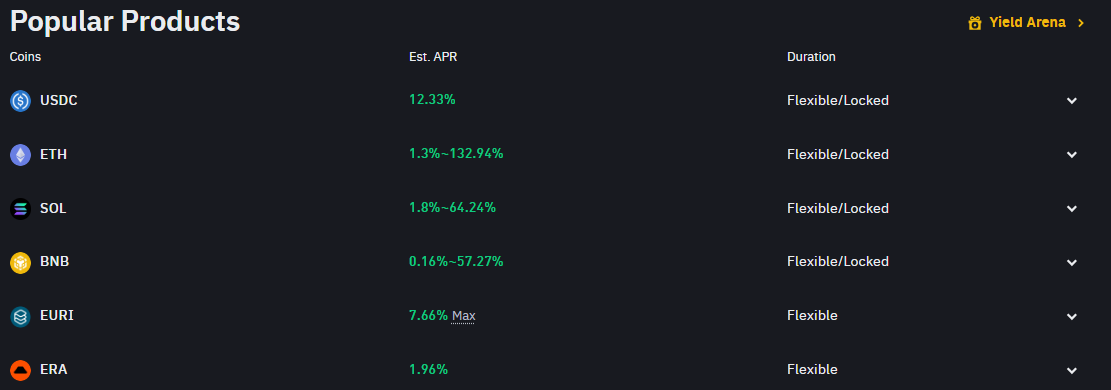
Staked assets remain in your account, but they are temporarily unavailable for trading. Annual percentage yields (APYs) vary depending on the asset and market conditions.
Launchpool allows you to earn new project tokens by staking BNB or FDUSD. Tokens are distributed daily and automatically credited to your wallet. Launchpool is often used for Initial Exchange Offerings (IEOs) and can be a way to discover early-stage crypto projects.
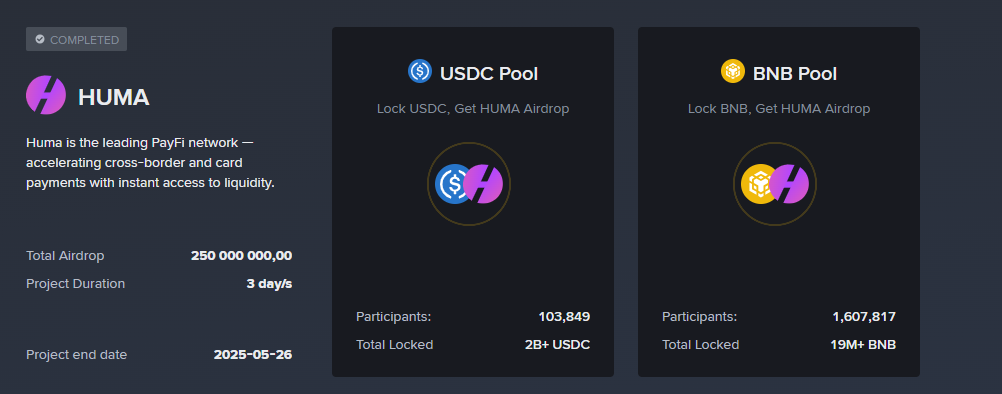
TIP: Use staking and Launchpool features to earn passive income
Now let’s talk about Binance fees. Binance divides transaction fees according to VIP levels, which are based on your 30-day trading volume. There are nine VIP levels in total, with higher levels offering lower fees and additional benefits. Fees on Binance are categorized into two types: maker and taker fees.
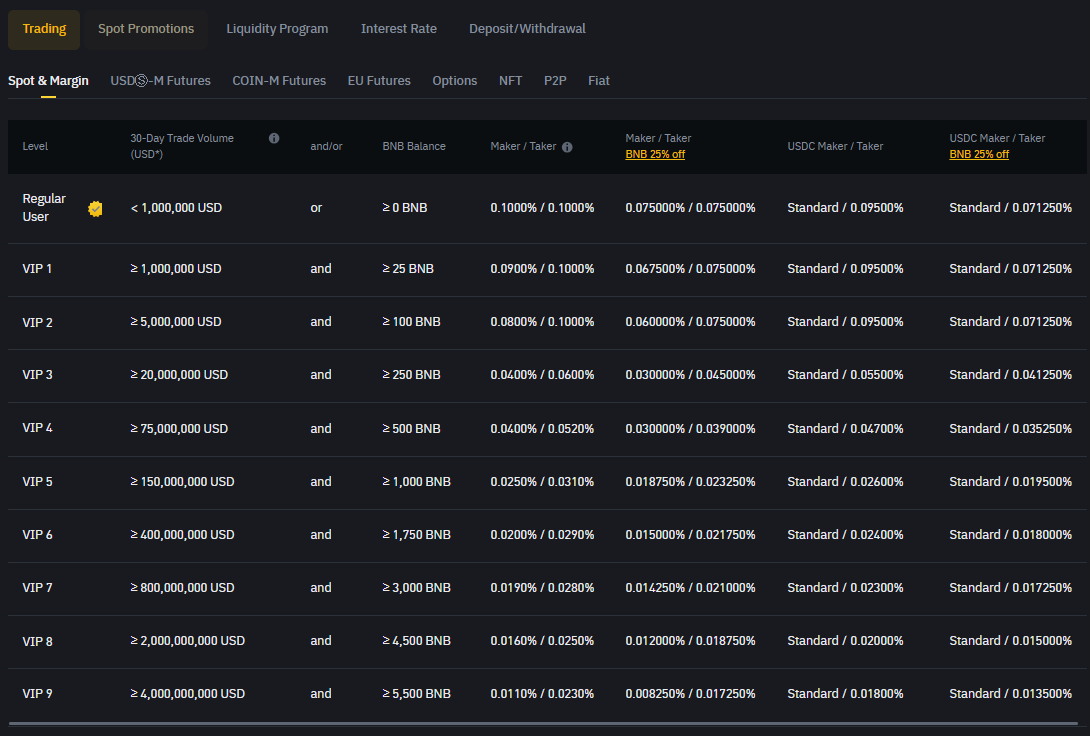
For regular users without any VIP status, the trading fee is 0.1% per transaction. However, this fee can be reduced to as low as 0.011% for VIP 9 traders with very high monthly trading volumes. Additionally, Binance offers a 25% discount on trading fees when you pay using Binance Coin (BNB), making trading more cost-effective for users who hold BNB. This tiered fee system encourages active trading and rewards loyal users with significant savings.
There are also deposit and withdrawal fees, which vary depending on the network. Crypto deposits are generally free, but withdrawals come with network fees, which are transparent on the withdrawal page.
TIP: Take advantage of Binance’s low trading fees
Security remains a top concern for crypto users, and Binance has continued to invest in protecting user assets. As of 2025, Binance uses a combination of the following safeguards:
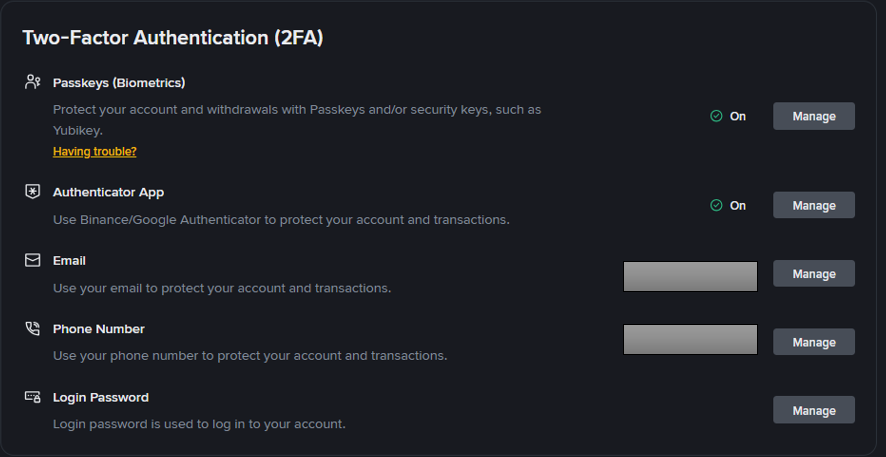
For maximum safety, users should avoid keeping large sums of crypto on exchanges and consider using cold wallets for long-term storage. However, for trading and staking, Binance’s wallet is convenient and reliable.
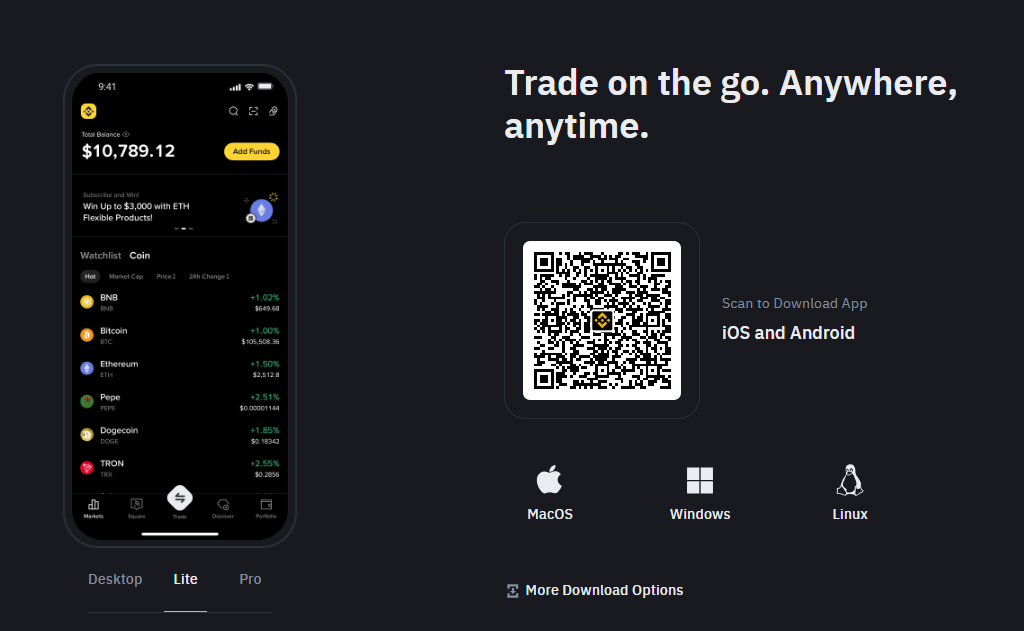
Binance’s mobile app is another highlight, offering a nearly identical experience to the desktop version. You can trade, stake, convert, and monitor your portfolio from anywhere. The app supports biometric logins, price alerts, and even Lite mode for beginners.
For new traders, it’s best to start with spot trading, practice on small amounts, and learn how order types work. Avoid jumping into futures or margin trading without understanding the risks. Use tools like price charts, stop-loss orders, and portfolio tracking to manage your exposure.
Educational resources are also available through Binance Academy, where you can learn about blockchain technology, trading strategies, and financial literacy at no cost. In 2025, Binance continues to expand this section, adding videos, quizzes, and tutorials tailored for all levels.
With crypto adoption continuing to grow, platforms like Binance will remain central to how users interact with digital finance. By mastering it now, you’re setting yourself up for long-term success in the evolving world of blockchain.