09 October 2025
 Share
Share
1


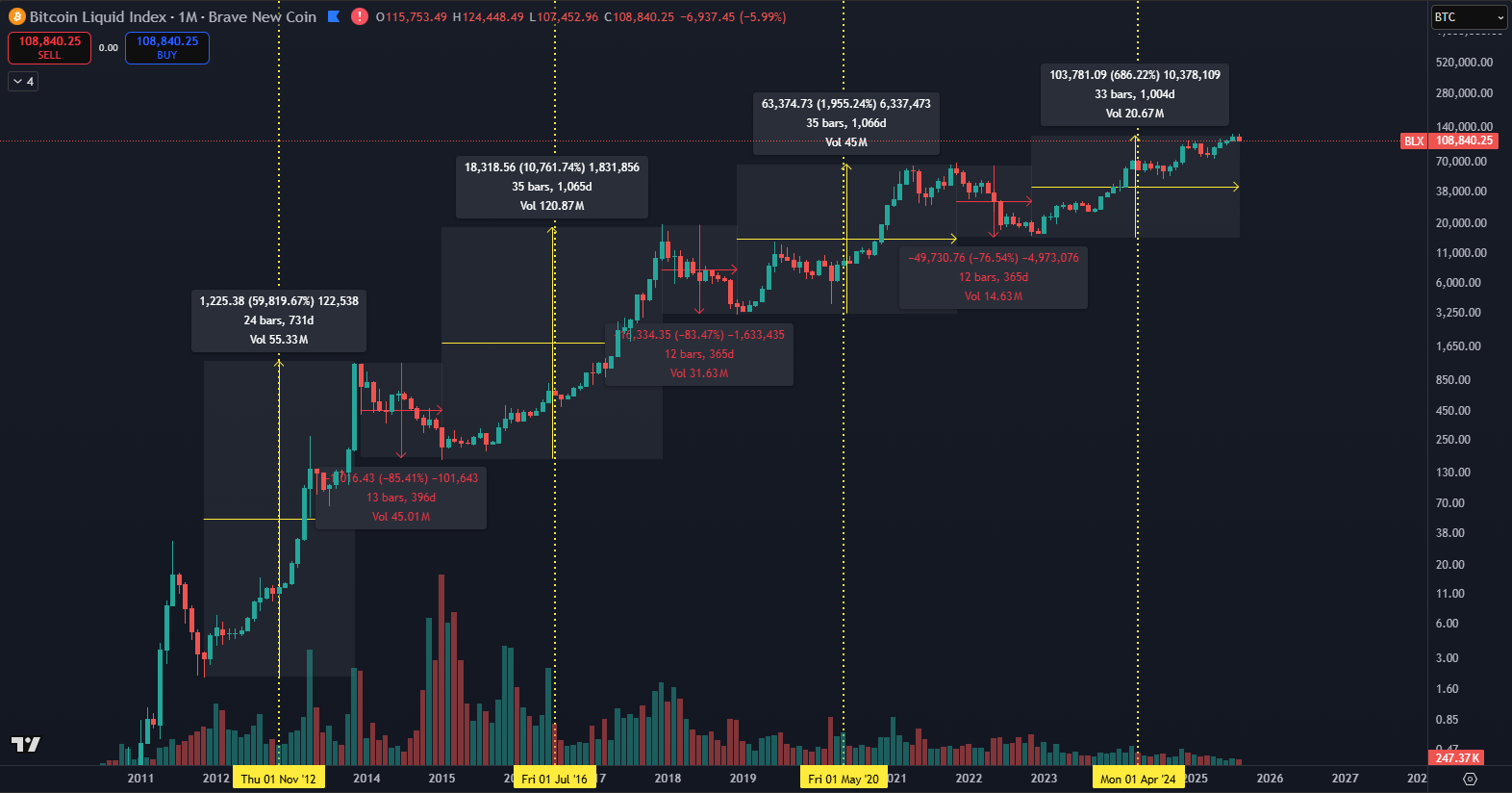
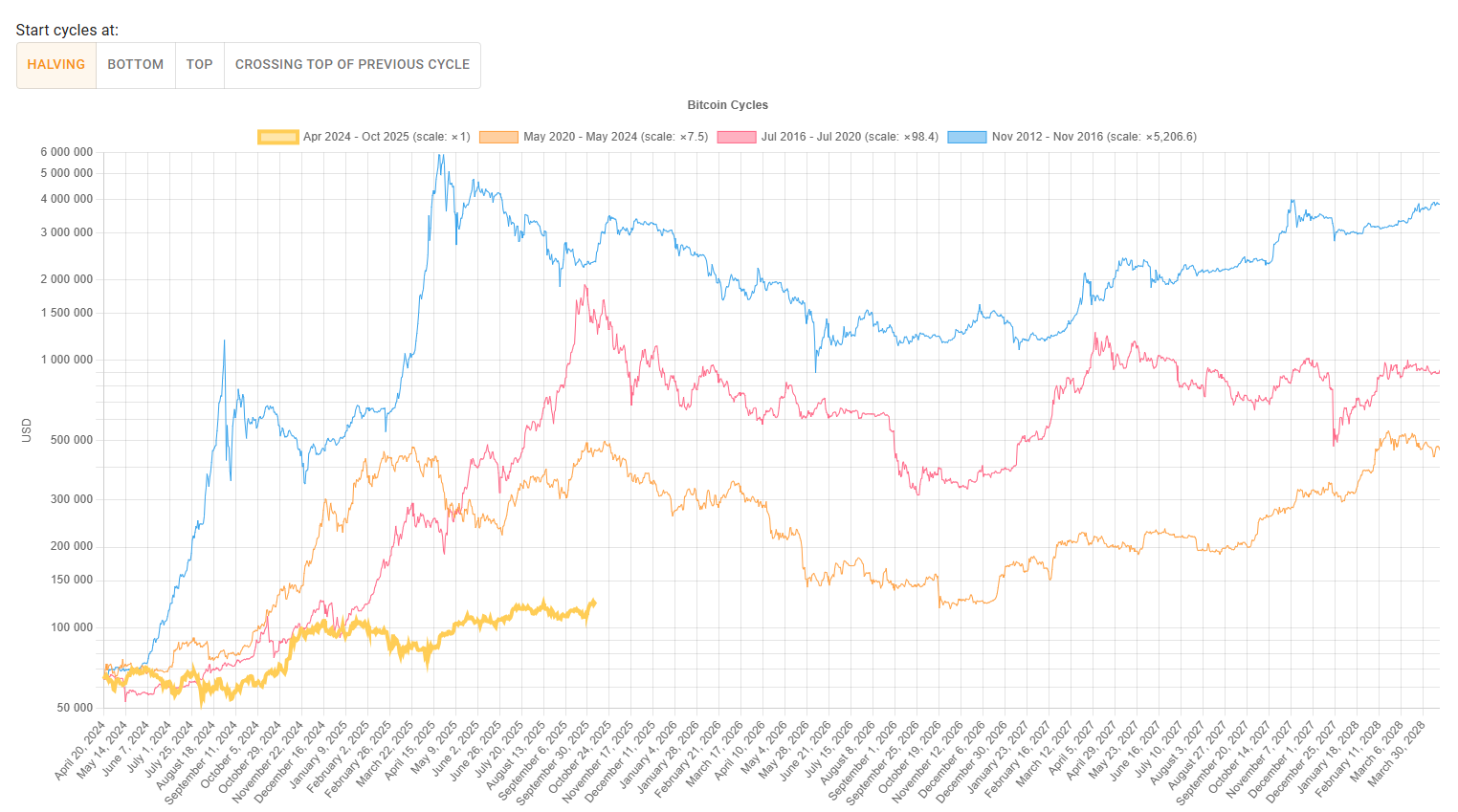
Bitcoin, despite constant speculation, still faithfully follows its traditional 4-year cycle. Since the first halving in 2012, data from TradingView repeatedly confirms that the price starts rising significantly approximately 1,000 days before and after the block reward reduction. This creates a typical rhythm of a rising and falling market.
According to this model, the peak of the current cycle should occur by the end of 2025, after which a correction of at least 70 % is expected, similar to the past. However, this scenario may not repeat, and Bitcoin may permanently break the halving logic.
Although the halving still reduces the supply of new coins by half, its impact on the price gradually diminishes. Percentage-wise, it is the same 50 % reduction, but in absolute numbers, the difference is increasingly smaller. While in 2012 the reward fell from 50 BTC to 25 BTC, the last halving in 2024 reduced it from 6.25 BTC to 3.125 BTC. This effect has therefore a diminishing influence on the market.
Therefore, other factors are coming to the forefront – monetary policy, global liquidity, macroeconomic stimuli, and institutional investments. These will likely outweigh the significance of the halving in the future.
The cycle itself has ended and will likely fail this time. The main reason is the amount of money in circulation, specifically in US dollars and Chinese yuan. Moreover, all previous cycles ended when central banks tightened monetary policy.
Today, the situation is different. The Federal Reserve is lowering interest rates, while the US Treasury is injecting trillions of dollars into the economy through the issuance of government bonds. President Donald Trump plans to let the economy run at full speed, which could extend Bitcoin’s growth beyond historical models.
The history of Bitcoin, according to Arthur Hayes, can be read through the inflows and outflows of money from two central sources – the US and China.
However, the situation is now changing. Beijing no longer wants to continue deflation, and its policy is shifting toward stability or mild easing. This means the Chinese influence will not restrain growth but rather act as a neutral factor, allowing US monetary flow to further support Bitcoin.
On Binance you can trade Bitcoin easily after registering and verifying your account. Just deposit funds, choose a trading pair, and open a trade according to the current trend. The platform offers spot trading, clear charts, low fees, and the ability to set orders.