16 October 2025
 Share
Share
1


Cryptocurrencies, according to TradingView data, are facing a critical moment after one of the largest liquidations in the history of digital assets. After the market saw nearly $900 billion in market cap liquidated in a single day, a new balance between centralized and decentralized platforms began to form.
This correction phase did not mean a collapse, but a necessary ecosystem cleanup that removed excessive speculation and strengthened the market’s fundamental mechanisms. It was a natural cleansing process that, although causing short-term chaos, revealed the long-term strength of the sector. Decentralized exchanges demonstrated exceptional stability during sell-offs. Unlike centralized platforms, they were able to handle record transaction volumes without outages.
The situation escalated after the announcement of 100% tariffs on Chinese imports, which triggered a wave of reactions. Nevertheless, the market quickly regained approximately $500 billion in market cap, showing surprising resilience and a growing ability to absorb external shocks.
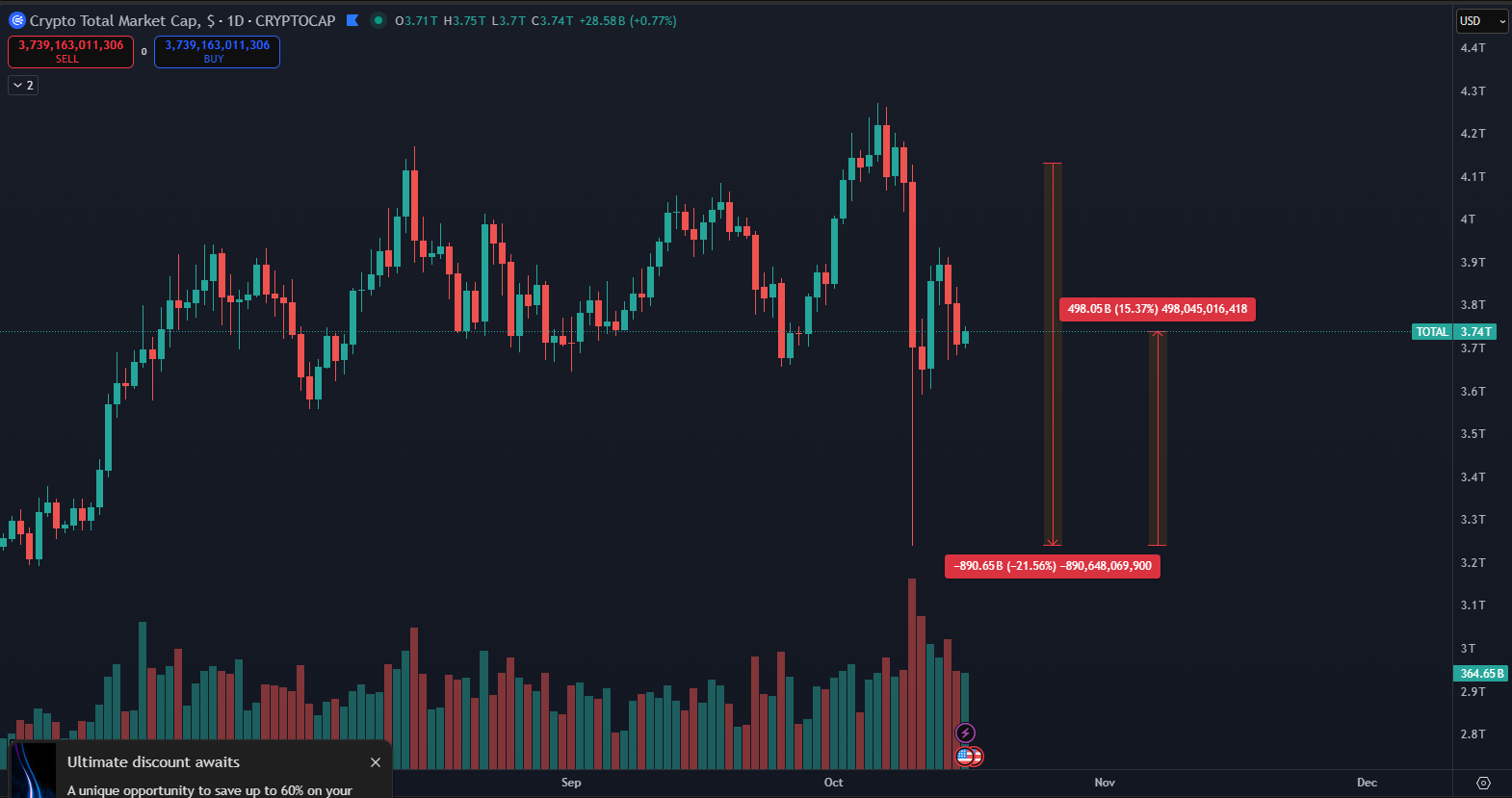
Compared to the past, today’s market is structurally more mature. Thanks to the rise of institutional investments, the adoption of cryptocurrencies by government entities, and the growing popularity of ETF products traded on exchanges, a healthier investment environment is taking shape.
Activity in US spot ETFs has somewhat weakened, but no extremes were recorded. Investors in these funds, according to a Glassnode report, have started to sell slightly, with a net outflow of approximately 2,300 BTC over the week. This development contrasts with past crises, when sales accelerated sharply.
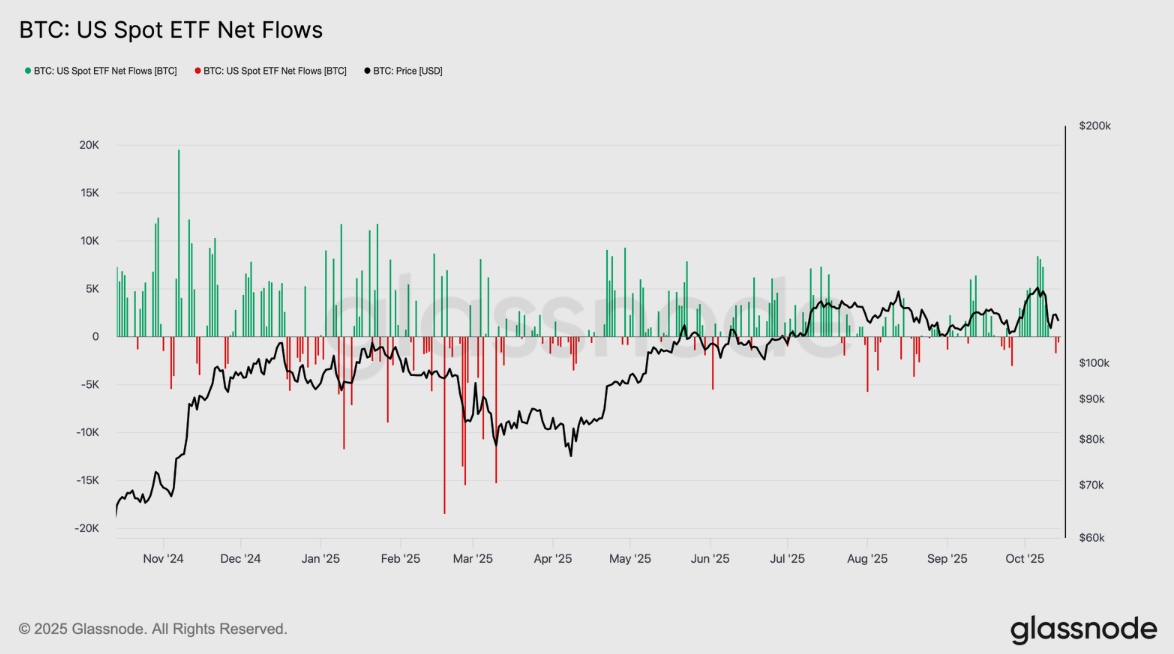
The current situation indicates caution rather than panic. Investors are waiting for a clearer signal of a growth return. However, if capital inflows into ETFs remain weak over the long term, it could indicate reduced demand, threatening one of the main drivers of previous Bitcoin growth cycles Bitcoin.
This trend indicates that cryptocurrencies are transitioning from a phase of wild speculation to a period of more stable and responsible growth. The liquidation, according to Coinglass data, wiped out $19 billion worth of positions, but at the same time reinforced investor confidence in market mechanisms.
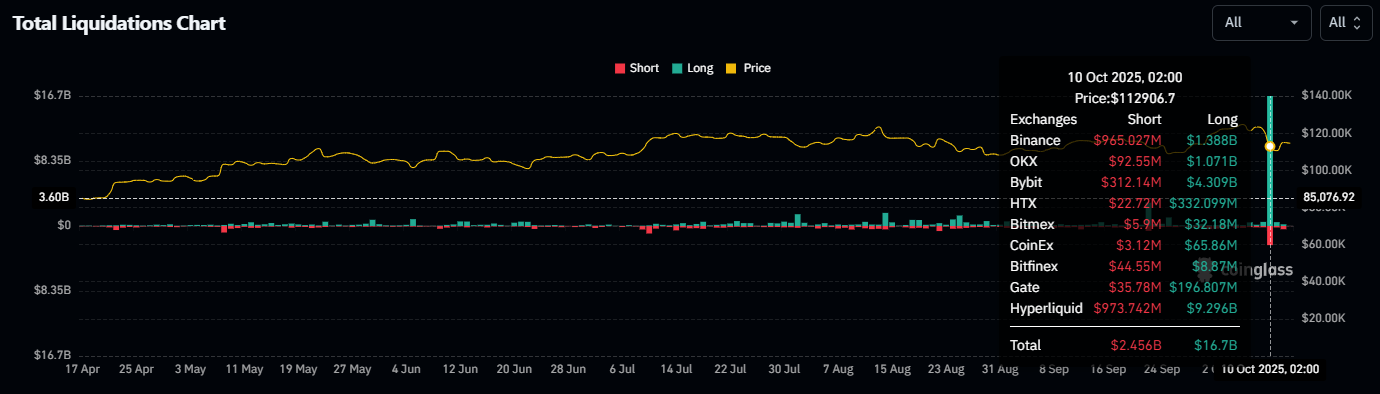
It also shows that volatility is not necessarily a sign of weakness but evidence of the system’s natural adaptation. A market that can absorb such shocks without long-term instability signals the maturation of the entire ecosystem.
If you are thinking about where to invest in cryptocurrencies, try the Binance platform. It allows simple buying, selling, and holding of cryptocurrencies with low fees and a user-friendly interface. It also provides 24/7 support, secure asset storage, and access to over a hundred cryptocurrencies for beginners and experienced investors.