04 August 2025
 Share
Share
1


Bitcoin significantly weakened since Friday after President Donald Trump introduced adjusted “reciprocal” tariffs on dozens of countries. As data from TradingView shows, the price of Bitcoin dropped to as low as $112,000, which is 9% below its all-time high. Overall, the decline in cryptocurrencies triggered mass liquidations of long positions, further pushing prices downward.
According to the platform CoinGlass, a total of $228 million in Bitcoin and $262 million in Ethereum were liquidated within just 24 hours. The new tariffs, ranging from 10% to 41%, led to capital outflows from speculative assets, among which cryptocurrencies naturally belong.
At the time of writing, Bitcoin is trading at $114,418, with the largest drop occurring on July 31. Since then, the price fell by 6% in just two days, confirming that the market has officially entered a correction phase. In practice, this means that Bitcoin is undergoing a natural cooling period following previous growth, which could lead either to price stabilization or further decline.
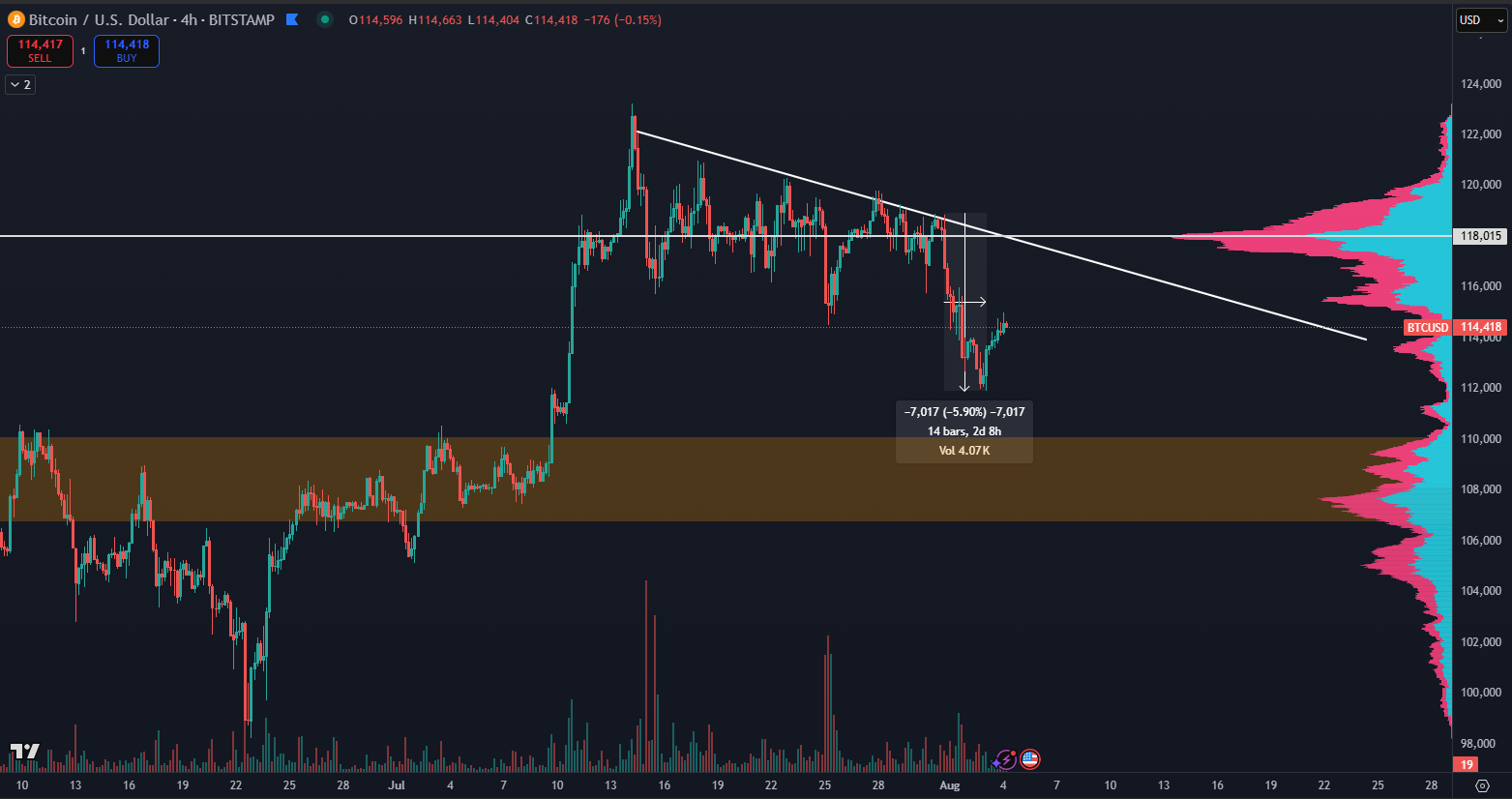
At the moment, it’s important to monitor whether the price stabilizes above the $112,000 level. If a new higher low forms, there is a chance of an attempt to break the previous high. From a technical perspective, the most significant support lies in the $110,000 area, where strong buying activity is concentrated.
However, it’s worth noting that a 9% drop from the high is not unusual. In the long term, Bitcoin’s bullish structure remains intact, even though short-term movements have created uncertainty among traders.
On August 1, Bitcoin ETFs recorded an outflow of $812 million, according to data from Farside, halting their monthly net inflows at approximately $6 billion. On the other hand, Ethereum ETFs attracted over $5 billion in July, with only one day of net outflow. On August 1, Ethereum ETFs also saw an outflow worth $152 million.
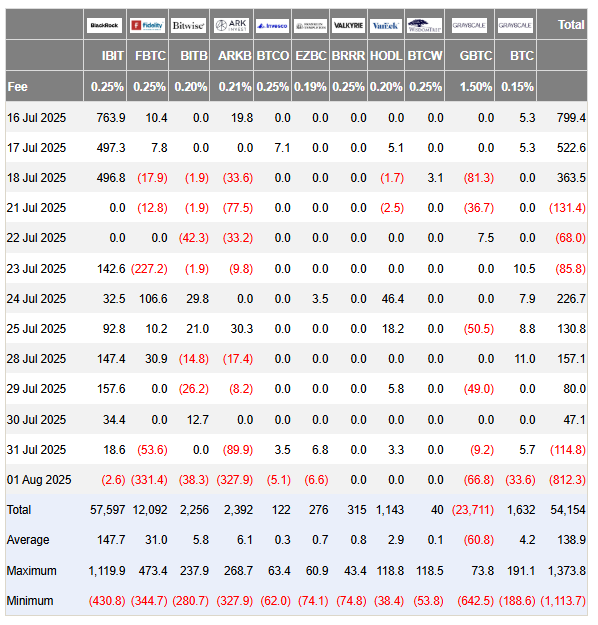
August is typically a month known for lower trading volumes and higher volatility. This may result in further correction or price stagnation. However, technical resilience and continued institutional interest may help Bitcoin and Ethereum stay above key support levels.
The market is entering a period of uncertainty where any macroeconomic signal could determine the next trend. Investors remain alert, especially in relation to monetary policy and geopolitical developments.