29 November 2025
 Share
Share
1


Bitcoin is entering a phase where the volume of realized losses sharply increases, putting pressure on liquidity. As Glassnode reports, the current 30-day average realized losses are approximately €403.4 million per day, exceeding the losses from both significant lows in the ongoing cycle.
This sharp increase indicates that investors are quickly exiting positions at a loss, as if trying to free themselves from risk in a weakening trend environment.
The 30-day average realized loss metric has currently shot up to levels more than double the values from the two previous corrections in this cycle. We last observed such extreme numbers during the FTX collapse in November 2022, when the bottom of the previous cycle was forming and the market was undergoing a sharp capitulation sell-off.
The current situation therefore suggests that the market may be entering a similarly unfavorable phase, where trust and liquidity are being lost. The sharp rise in realized losses may be the first signal of a starting long-term correction if the market cannot quickly restore demand and stabilize sentiment.
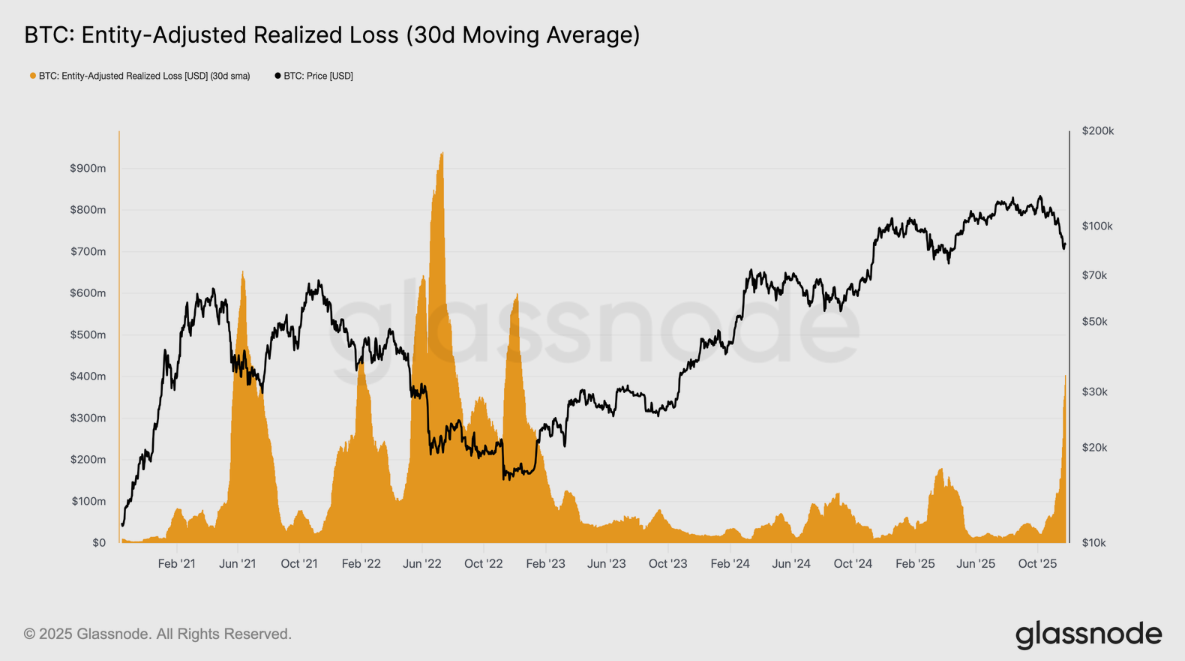
Such behavior often accompanies a market that can no longer generate new impulses and appears exhausted. When market structure starts to crumble, attention naturally shifts to available liquidity. A market with low liquidity tends to drop even under smaller sell-offs, revealing deeper weaknesses in demand over time.
Buy cheaper Bitcoin on Binance and get a $100 bonus
One of the most sensitive indicators of short-term demand is the Realized Profit/Loss Ratio (STH). It measures the prevalence of realized profits or losses among investors holding coins for a short time. In October, this ratio slipped below its neutral value of 4.3 and has currently dropped to 0.07, representing massive dominance of losses. Such a strong predominance of loss exits indicates that liquidity among short-term participants has essentially dried up.
Bitcoin is also coming after a period of significant absorption of demand during the second and third quarters of 2025, when long-term holders increased the volume of coins sold. As this long-term capital was released into circulation, the market needed a new wave of demand, which is currently missing.
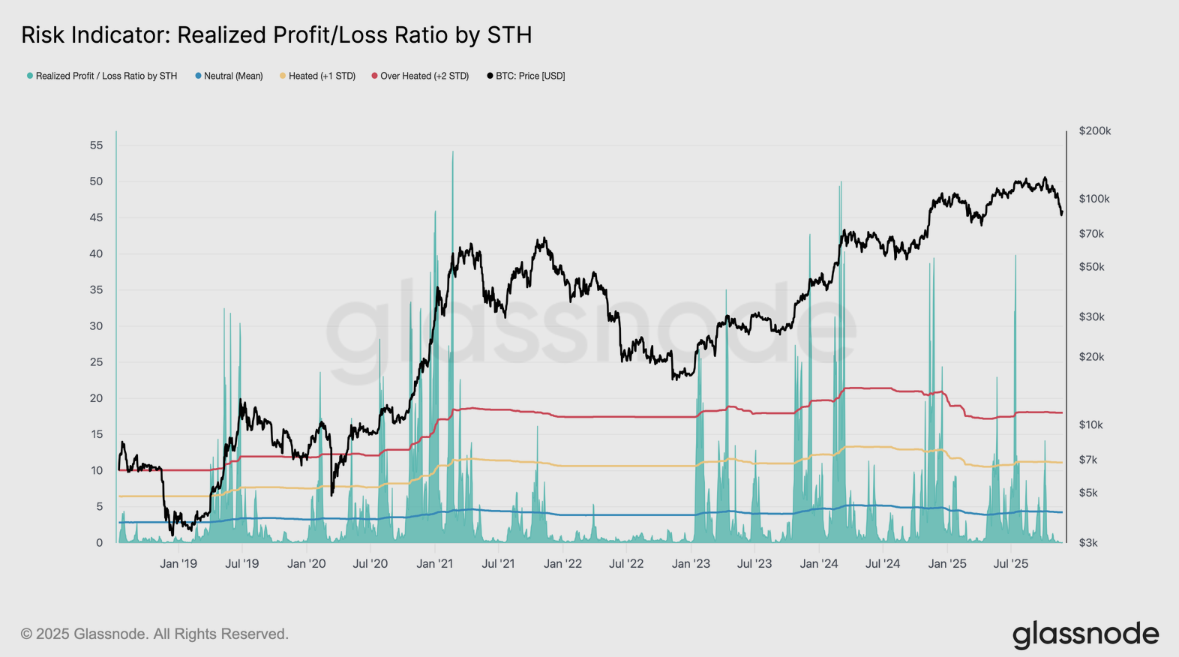
If the STH Realized Profit/Loss Ratio remains at these low levels, the market may start to mirror weaknesses reminiscent of the first quarter of 2022. The market is signaling that if demand does not quickly revive, weakening sentiment and disappearing liquidity could deepen the correction, similar to what investors experienced in previous cycles.