03 October 2025
 Share
Share
1


Bitcoin in 2025 is lagging behind investor expectations. Since the beginning of the year, it has risen approximately 27 %, while the Nasdaq Composite reached 17 % and gold prices increased by 46 %, according to Forbes.
This performance raises a question among traders: „Is Bitcoin at the top?“ The digital currency is often described as digital gold, yet this year it lags behind gold and has only slightly outperformed major stock indices.
Many analysts disagree with the claim that the cycle has reached its peak. The current trend may indicate only temporary market euphoria, not the start of a long-term uptrend. This year has been characterized by rapid gains, slowing momentum, and repeated buying during dips.
Comparing cycles using data from TradingView provides a clearer perspective. Bitcoin so far is following historical cycles closely. Prices historically rose for about 500 days before and after the halving, which suggests that the peak of the current cycle could arrive in autumn.
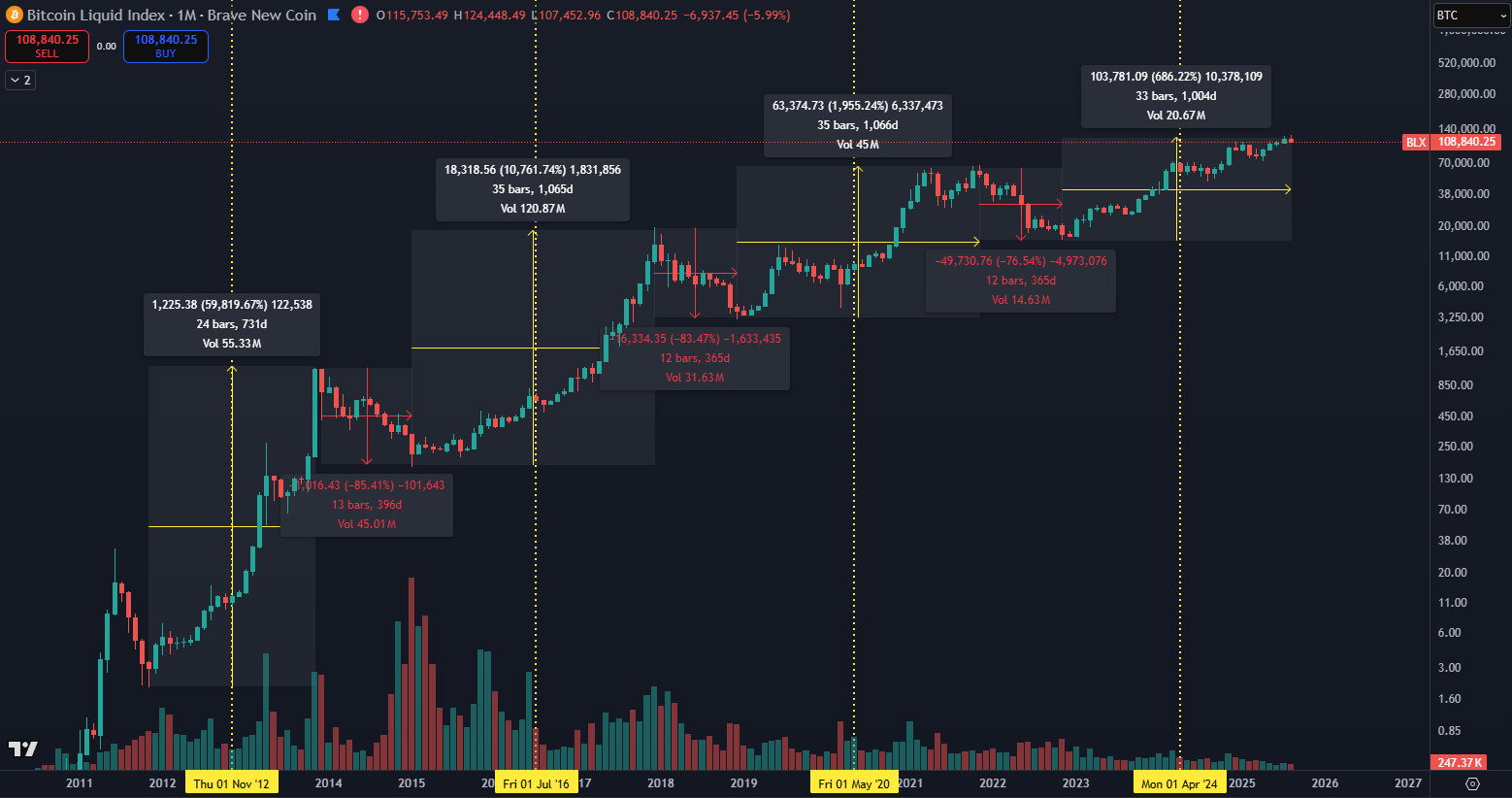
After reaching the peak, a one-year correction is expected, although most analysts agree it will not be as sharp as in previous cycles when prices fell 70–80 %. This is due to support from ETFs, government, and institutional purchases. However, if Bitcoin does not reach its peak this year, it would break the trend maintained since 2009, the very beginning of the cryptocurrency.
According to data from CoinMarketCap, Bitcoin is currently trading around $118,500, only $6,000 below its all-time high. It seems only a matter of time before this level is broken. After reaching a new high, some capital is expected to move into altcoins, potentially triggering a traditional altcoin season.
This scenario would align with the theory of Bitcoin peaking in autumn followed by a one-year correction. The chance of an altcoin season is further supported by the altcoin season index from Blockchain Center, which has been rising since early July.
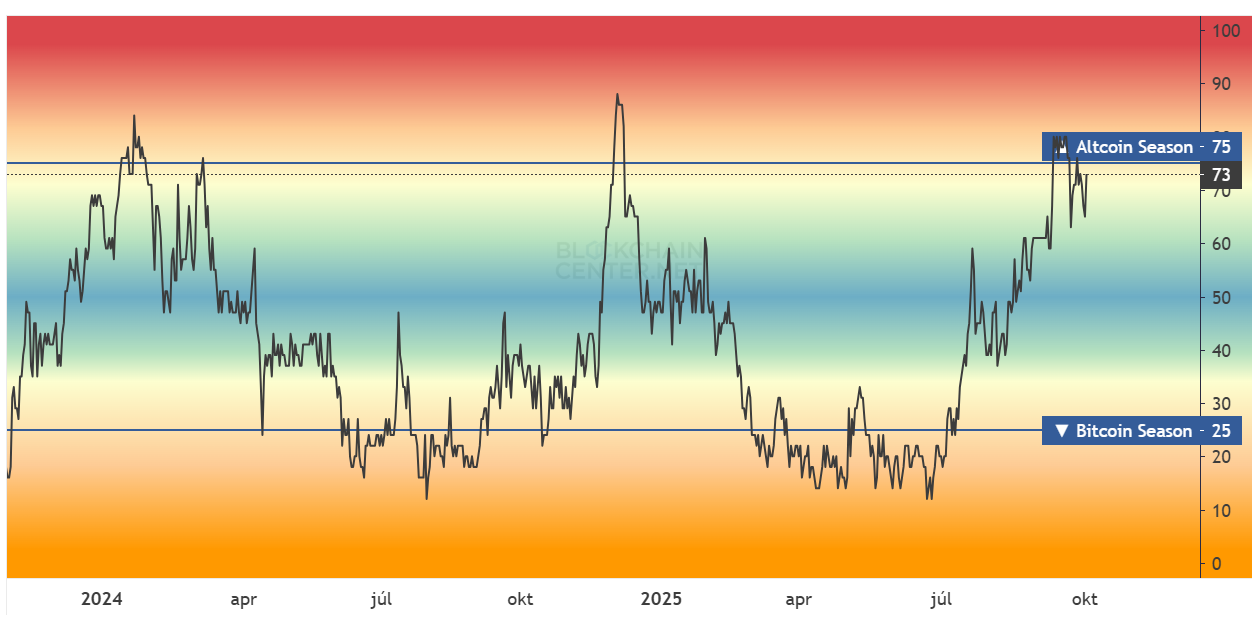
The question remains what happens after this euphoria. If Bitcoin does not experience a 60–70 % correction after the peak and the subsequent euphoria, the historical cycle pattern observed since the inception of the cryptocurrency would be disrupted. Such a scenario would signify a major shift in Bitcoin’s traditional cycles and could affect investor behavior and overall crypto market dynamics.