01 September 2025
 Share
Share
1


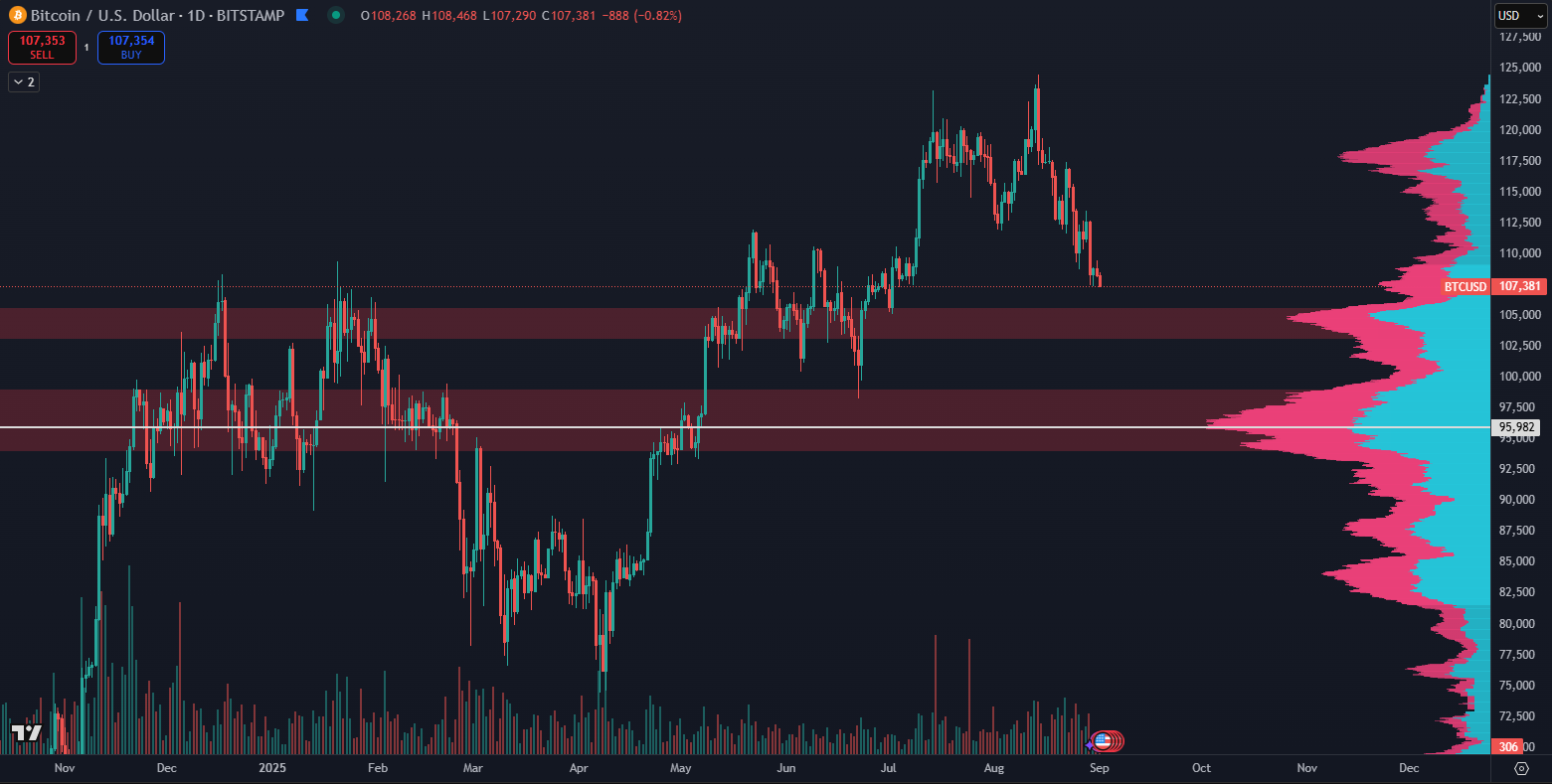
Bitcoin has fallen to $107,300, according to TradingView, marking the lowest price in the last two months. This drop is raising concerns among investors who are asking whether the current correction has already hit the bottom or if it could fall to even lower levels.
The nearest significant support levels are located in the ranges of $106,000 to $103,000 and $99,000 to $94,000, where higher trading volumes and numerous positions were previously opened by investors.
If the price drops to $94,000, it would mean approximately a 25% decline from the all-time high of $124,500. In the context of the cryptocurrency market, this is still considered a standard correction depth. By comparison, in the first quarter of this year, we witnessed an even larger drop of 32%.
You can easily buy Bitcoin on the Binance exchange, which offers a user-friendly interface, low fees, and high security. Simply create an account, verify your identity, and deposit funds. You can then quickly and conveniently purchase Bitcoin and other cryptocurrencies.
A closer analysis shows that the current decline structure resembles that of the first quarter. At that time, Bitcoin formed a double top, followed by a dynamic second wave of decline. We are observing a similar scenario today, suggesting that the market may still be in the second phase of the correction.
This means that the coming week may bring an even deeper drop, which could halt at one of the mentioned support zones. Only then is price stabilization and a potential rebound expected. Investors will closely monitor the development and trading volumes to assess whether Bitcoin is preparing to change its trend.