29 July 2025
 Share
Share
1


Bitcoin is entering an era of “permanent stable growth” in which the traditional four-year cycle no longer reflects reality, according to Matt Hougan, Chief Investment Officer at Bitwise. He explained that the long-standing cyclical model based on halvings and macroeconomic triggers is losing relevance, according to a report by News Bitcoin.
According to Hougan, we are entering a period where cryptocurrencies are being driven by new and deeper market mechanisms. A major factor is the increasing participation of financial institutions, which are entering the crypto market not only through retail platforms but also via pension funds, endowments, and national ETF platforms. He identified these new players as the driving force behind a new phase in the development of the crypto market.
The key point is that interest rates are no longer the threat they once were, and the growing regulatory clarity is strengthening institutional confidence in cryptocurrencies. Traditional finance is no longer standing aside – on the contrary, Wall Street is now actively building crypto-based portfolios, Hougan stated.
Why is the four-year cycle dead?
1) The forces that have created prior four-year cycles are weaker:
i) The halving is half as important every four years;
ii) The interest rate cycle is positive for crypto, not negative (as it was in 2018 and 2022);
iii) Blow-up risk is… https://t.co/F9ybjHEeB5
— Matt Hougan (@Matt_Hougan) July 25, 2025
While it may seem like we’re at the beginning of another supercycle, Hougan took a more cautious approach and refers to it as a “sustainable stable rise.” He pointed to the growing number of companies holding cryptocurrencies as part of their assets. This new factor may represent a cyclical risk, though it is not comparable to the volatile swings of previous years.
Get 100 $ bonus on Binance now
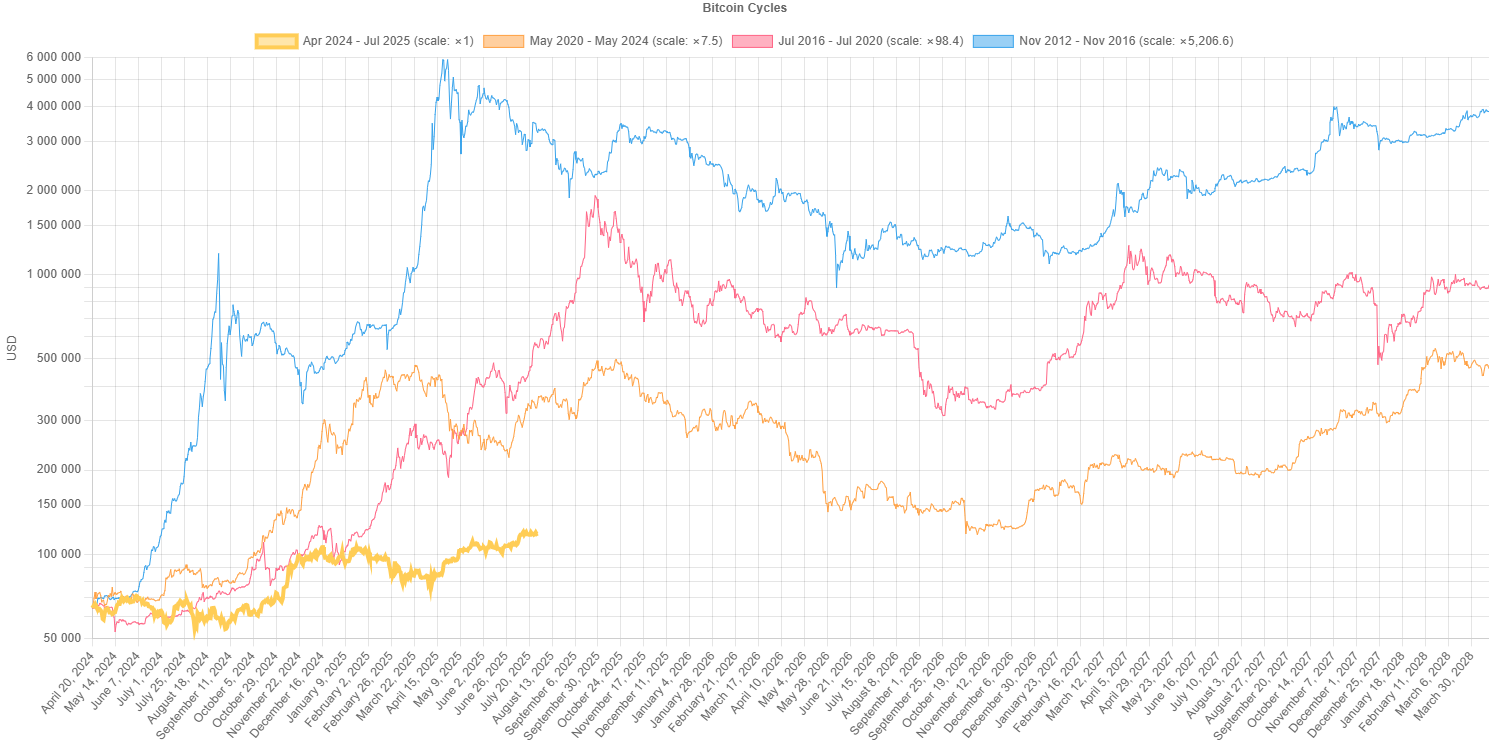
According to data from TradingView, Bitcoin still respects the traditional four-year cycles, but has also broken away from many on-chain indicators that were valid until recently. The growth of Bitcoin is currently the most stable in its history, along with its increasing dominance. This clearly indicates that Bitcoin is behaving more like a traditional asset than a volatile cryptocurrency.
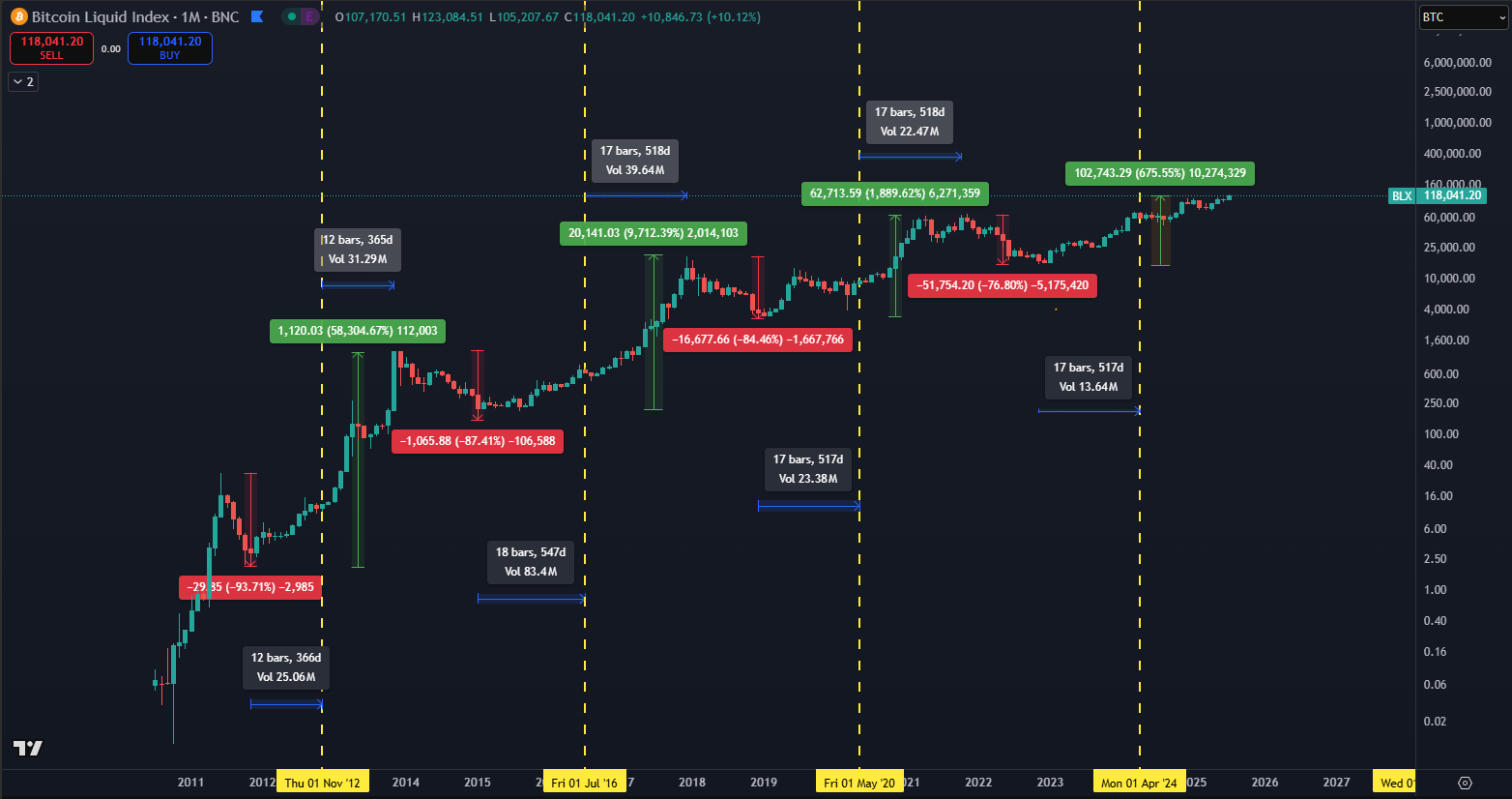
According to BitcoinCyclesComparison, each Bitcoin cycle has become less profitable. At present, we are seeing returns of about 700%, while the previous cycle delivered 1,900%, the one before that 9,700%, and the earliest one nearly 58,000%. While previous cycle differences were five- to sixfold, the current drop is only 2.5x, which points to a stabilizing growth trend for Bitcoin.