08 July 2025
 Share
Share
1

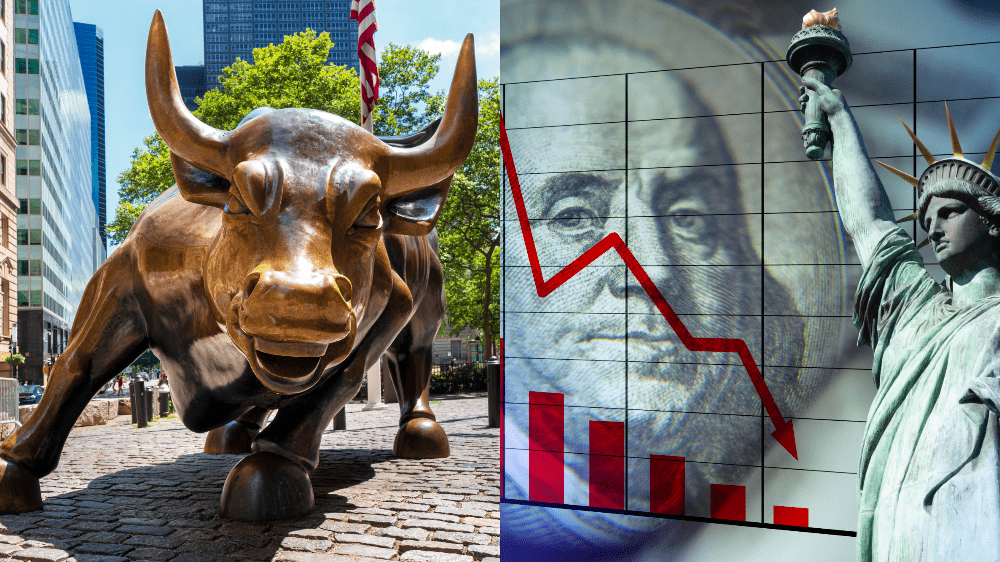
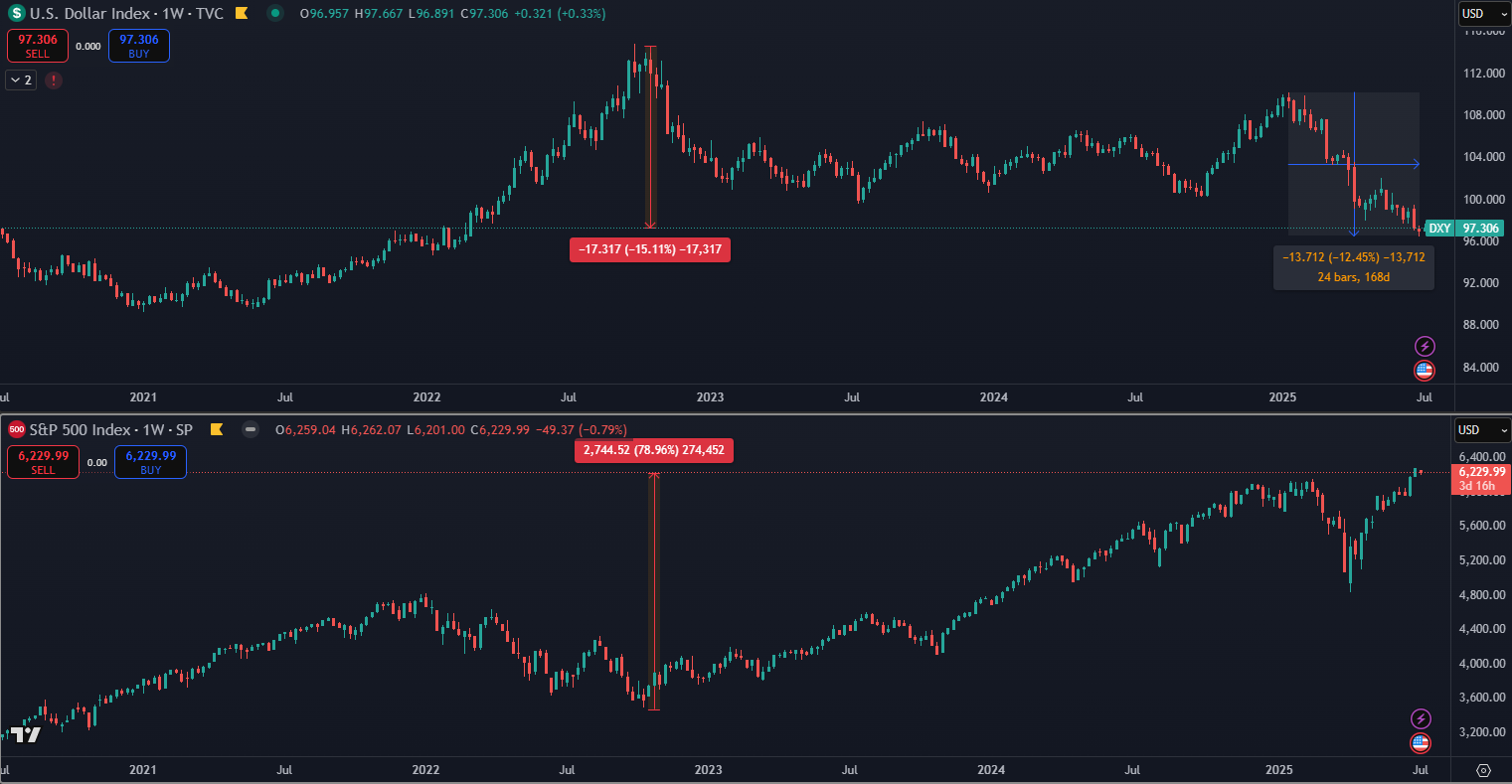
Stocks of American companies have been experiencing an unprecedented surge since October 2022. The main U.S. stock index S&P 500 has appreciated by 79 % since then, according to data from TradingView, indicating strong investment optimism. However, during the same period, the U.S. Dollar Index (DXY) weakened by 15 %, pointing to a shift in global monetary dynamics.
U.S. stocks are benefiting from favorable developments, but there is also a noticeable decline in the DXY dollar index in the background. This index measures the value of the U.S. dollar against a basket of major world currencies, such as the euro, Japanese yen, or British pound. While stocks were rising, the dollar initially dropped sharply after October 2022 and then moved sideways for two years.
The turning point came at the beginning of 2025, when Donald Trump was re-elected as President of the United States. Since then, the dollar index DXY has dropped by a record 12.45 %, marking the fastest decline in decades. Trump’s new administration introduced strict tariff barriers and reinstated protectionist trade policies, which led to a decrease in investor confidence in the U.S. currency.
XTB offers a wide selection of stocks. Start investing today.
Paradoxically, a weaker dollar can be short-term advantageous for U.S. stocks. It lowers the price of American exports, thereby boosting the revenues of large corporations from international trade. Many tech giants like Apple and Microsoft benefit from a more favorable exchange rate against foreign clients.
On the other hand, long-term dollar weakening creates inflationary pressures, raises prices of imported goods, and threatens consumer purchasing power. As a result, investors are forced to rethink their portfolios – some shift to assets denominated in other currencies, others focus on commodities such as gold or oil.
For investors, the current situation brings higher volatility and the need to adapt to new geopolitical and economic trends. U.S. stocks may be rising, but behind this growth stands a dollar that is losing its position as the global leader.