25 December 2025
 Share
Share
1


Bitcoin is under increasing pressure, which comes not only from price movements but also from the time-related stress of holding losses. According to an analysis by Glassnode, currently 23.7% of the circulating supply is below the purchase price.
Of this, 10.2% is held by long-term investors and 13.5% by short-term investors, indicating a gradual transition of recent purchase losses into the long-term holder group. This trend creates pressure on investors with lower resilience, who may gradually capitulate and join the sellers of losses.
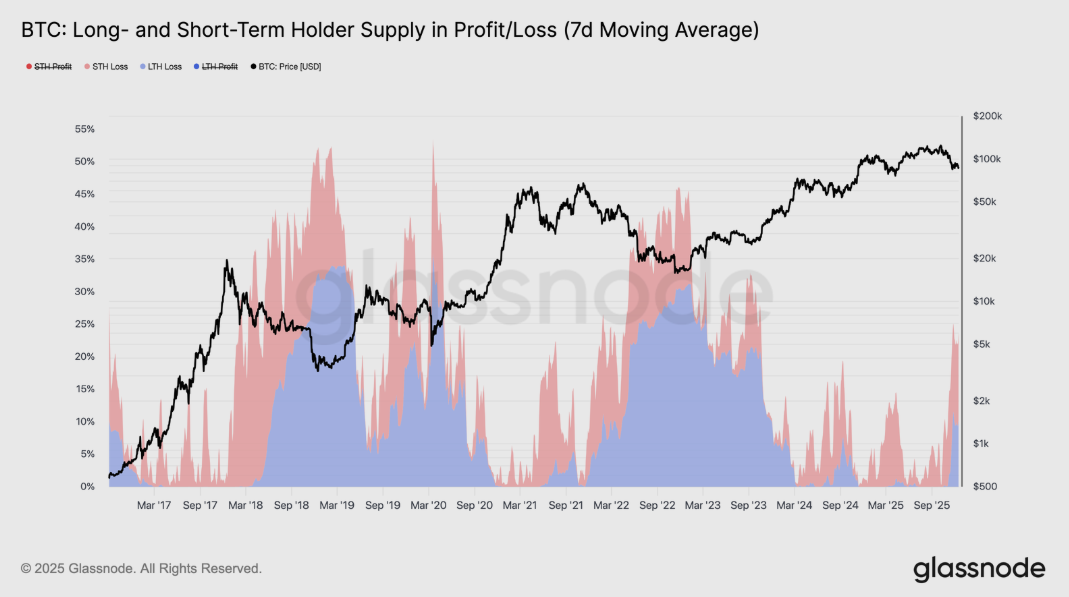
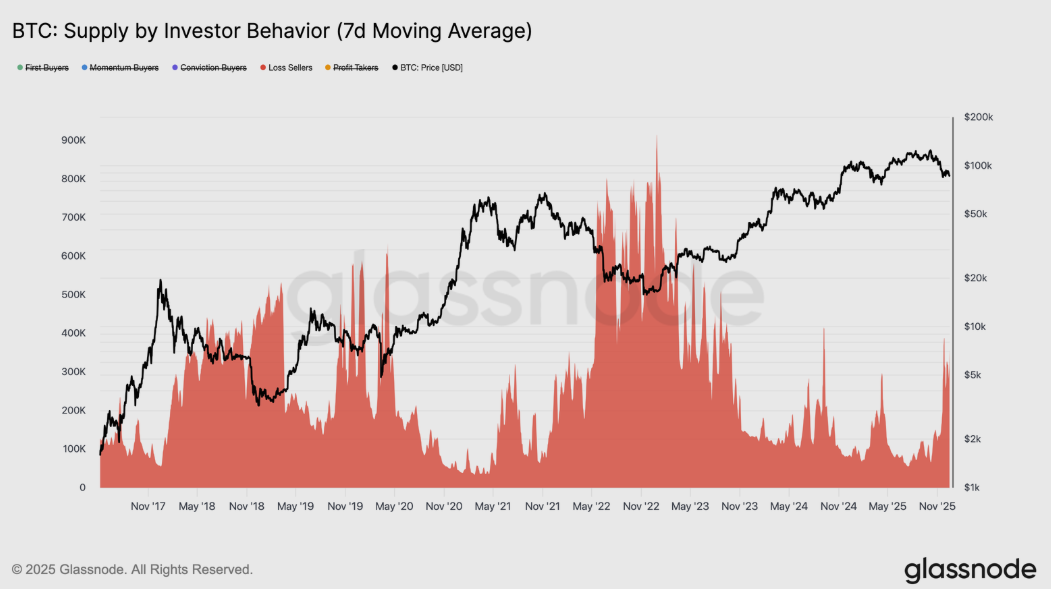
Analysts monitor how time exposure affects investor behavior. Supply by Investor Behavior classifies holdings based on reaction to price, not just asset age. Groups include high-conviction investors, buyers, newcomers, profit-takers, and loss sellers. This framework allows for more precise tracking of who sells at a loss and how the market adapts to long-term stress.
Currently, the volume attributed to loss sellers has risen to approximately 360,000 BTC. This indicates that if Bitcoin falls below the True Market Mean of 81,300 dollars, the group of loss sellers may expand further. This would increase selling pressure and endanger the fragile market structure.
Register on Binance and get 100$ bonus
The True Market Mean represents the average historical price at which Bitcoin has traded and shows where the current price stands relative to this “fair” value.
Long-term holders absorb short-term losses over time, but each new decline triggers further loss realization. This process contributes to gradual market weakening as capitulation sales accumulate and create additional pressure. Both the spot market and derivative positions reflect investor nervousness as they attempt to protect capital from further declines.
The time factor thus becomes a dominant force that determines market dynamics. Bitcoin holders are forced to evaluate their strategies and resilience to losses. Further weakening could trigger a series of sales that add up to a broader market decline.