21 November 2025
 Share
Share
1

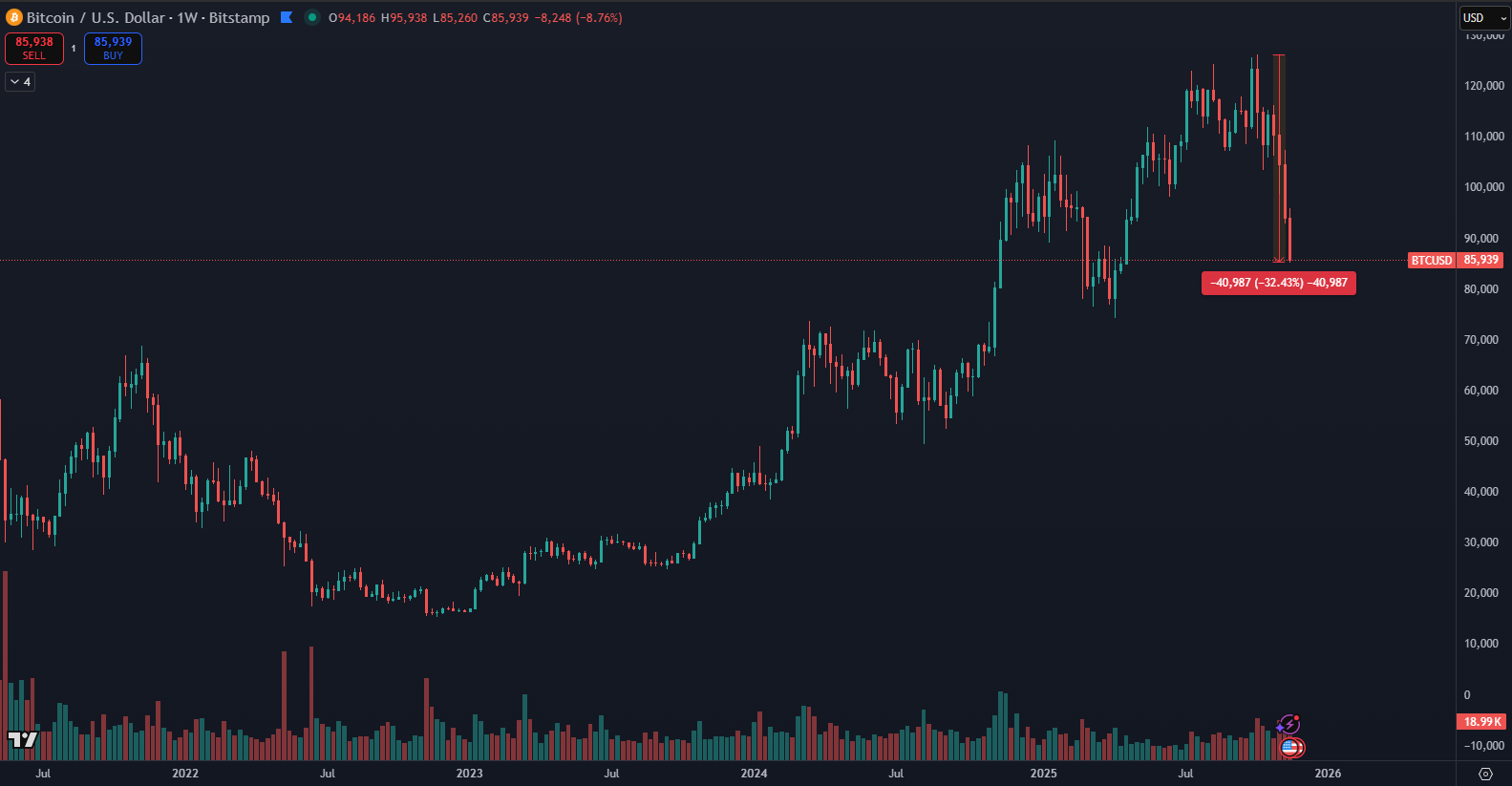
Bitcoin according to data from TradingView is once again drawing investors’ attention as it is in the steepest correction since June 2022. This time, it is not just an ordinary sell-off. The pace of the decline is, without exaggeration, one of the most dynamic seen in this cycle.
Although the depth of the drop at approximately 32% corresponds to the two previous corrections in this cycle, the decisive factor is the current sharpness of the fall. The aggression of the move caused Bitcoin to slide to around $85,000, a level last seen in April.
These events create the impression that October may have represented a potential peak of the current cycle, and the subsequent correction acts as a natural adjustment for the excessive momentum of the previous months.
The market is following a familiar pattern. After a sharp rise comes a phase where sentiment calms, trading activity slows, and investors mostly reassess their long-term strategies. In many ways, this resembles previous periods when significant milestones were followed by calmer, though often painful, landings.
A comparison of individual halving cycles increasingly suggests that the idea of creating a local peak in October 2025 has been realized more precisely than much of the market expected. The recurring pattern, which has been confirmed several times, has again shown its validity. Halving cycles have not stopped working, and their signals should not be underestimated.
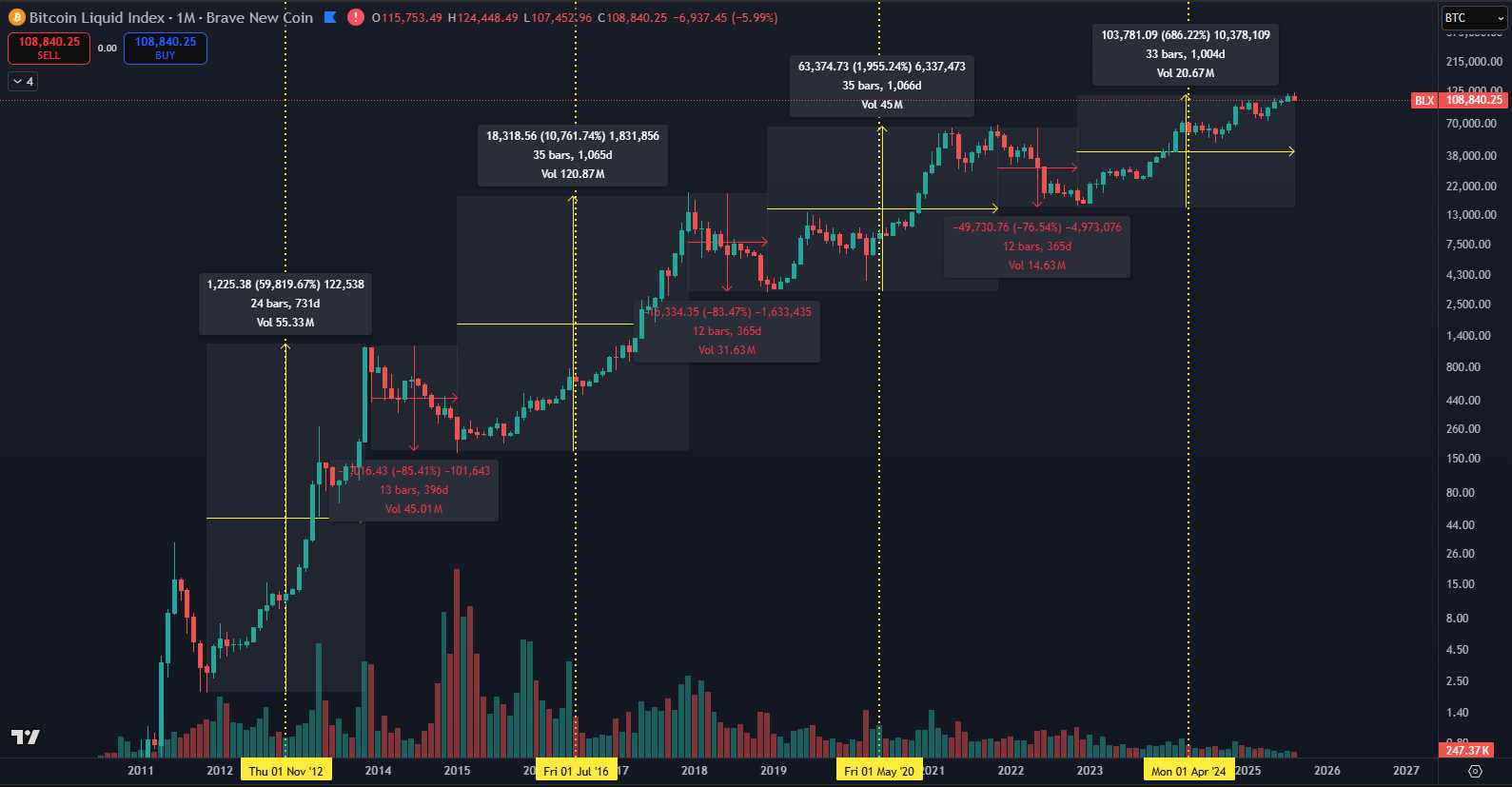
A characteristic feature is also the length of the growth phase. In the previous two cycles, the growth lasted approximately 1,000 days, with the first half of this period occurring before the halving and the second after it. The current development appears almost identical, adding further weight to the theories about Bitcoin’s cyclical nature.
Nevertheless, the question of how deep the upcoming weakening may be remains open. History has seen drops of around 80%, but this time such an extreme scenario may not be necessary. A drop of around 50% might be sufficient to clear the market, but the truth remains uncertain. The trajectory for the coming months is currently unknown, and predictions in such phases often evaporate.